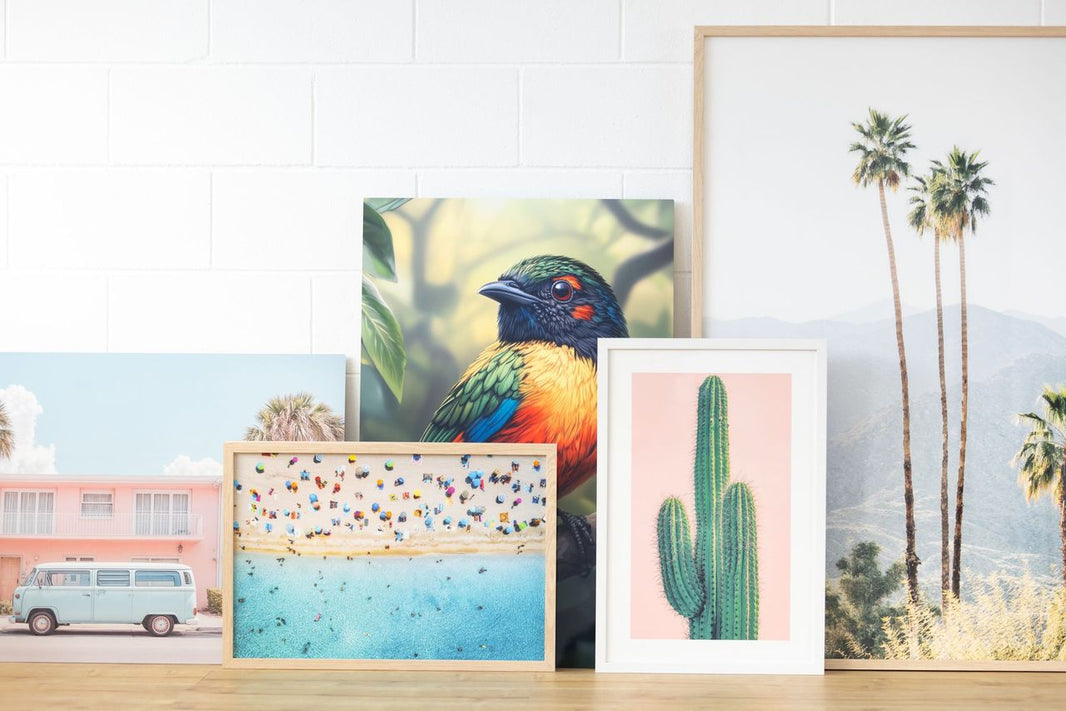


A giclée print (pronounced zhee-clay) is a high-quality fine art inkjet print produced using archival pigment inks and specialist papers or canvas. Unlike standard photo prints, true giclée prints are designed to deliver superior colour accuracy, detail, and long-term durability.
Giclée printing is commonly used for fine art reproductions, photography, and limited edition artworks because it allows subtle tones, smooth gradients, and sharp detail to be reproduced with consistency. When produced correctly, giclée prints can last decades without noticeable fading under normal display conditions.
In this guide, we explain what a giclée print is, how it is made, and when choosing giclée printing is worth the extra investment.
What Does “Giclée” Actually Mean?
The term giclée comes from the French word gicler, meaning “to spray”. In printing, it refers to the controlled spraying of microscopic ink droplets onto paper or canvas using high-resolution inkjet technology.
In a fine art context, giclée printing describes a specific standard of inkjet printing rather than a single machine or brand. To be considered a true giclée print, the process must use archival pigment inks and professional-grade substrates designed for long-term display.
Not all inkjet prints qualify as giclée prints. The term is reserved for prints produced to fine art standards, where colour accuracy, consistency, and longevity are the primary focus.
What Makes a Print a True Giclée Print?
A true giclée print is defined by the materials and production standards used, not simply the type of printer. When produced correctly, giclée printing delivers high detail, accurate colour, and long-term stability suitable for fine art display.
For a print to qualify as a giclée, three key factors must be in place:
Pigment-based inks: Archival pigment inks are more stable than dye-based inks and are chosen for their resistance to fading. This helps giclée prints maintain colour accuracy over long periods when displayed indoors.
Archival-grade paper or canvas: Giclée prints are produced on acid-free, heavyweight substrates designed for longevity. Common options include cotton rag and textured fine art papers, as well as archival canvas for larger works.
High-resolution source files: Image quality matters. To achieve sharp detail and smooth tonal transitions, files must be prepared at a resolution suitable for the final print size. As a general guide, 300 DPI at print size is considered a professional standard.
Together, these elements ensure the finished print retains the look, texture, and tonal depth intended by the original artwork or photograph.
How Are Giclée Prints Made?
Giclée printing follows a controlled, multi-step process designed to reproduce artwork and photography with accuracy and consistency.
1. Image preparation: The process begins with a high-resolution digital file. This may be a professionally captured photograph, a digital artwork, or a scanned original artwork prepared specifically for print. Image quality at this stage is critical, as the final print can only reflect the detail present in the source file.
2. Colour-accurate printing: The prepared file is printed using professional inkjet printers that apply archival pigment inks in extremely fine droplets. These inks are layered precisely to produce smooth gradients, accurate colour reproduction, and sharp detail without visible dot patterns or banding.
3. Selection of archival paper or canvas: The image is printed onto an archival-grade substrate chosen for the intended finish. Cotton rag and textured fine art papers are commonly used for art prints, while archival canvas is often selected for larger works or canvas displays.
4. Ink curing and stabilisation: After printing, the giclée print is allowed to cure so the inks fully stabilise. This step supports long-term durability and colour consistency before the print is handled, mounted, or framed.
5. Finishing and presentation: Once cured, the print is ready for trimming, mounting, or framing. Each step is handled carefully to preserve the surface quality and overall presentation of the finished print.
How Giclée Prints Compare to Standard Photo Prints
If you’re deciding between a giclée print and a standard photo print, the difference comes down to how the print will be used and displayed.
Standard photo prints are suitable for everyday use, while giclée prints are produced to a higher archival standard for long-term display and fine art applications.
The table below outlines the key differences.
Frequently Asked Questions About Giclée Print
Not exactly. Giclée printing uses inkjet technology, but not all inkjet prints qualify as giclée. To meet that standard, the print must use pigment-based inks, archival-grade paper, and a high-resolution image file, typically 300 DPI or higher. It’s a combination of materials and precision that sets giclée apart from basic photo prints.
Not at all. While giclée is popular among creatives for reproducing art and photography, it's just as suitable for personal photos, especially when you’re framing them, displaying them or giving them as gifts.
Giclée prints are intended for long-term display. When printed on archival paper or canvas using pigment inks and cared for properly, they can retain their appearance for decades.
Display conditions and framing choices play an important role in long-term preservation, but you should get at least 80-100 years out of your print if you are properly caring for it.
When produced using archival pigment inks and displayed indoors under normal conditions, giclée prints are designed to resist fading for many years. Like all prints, longevity depends on factors such as light exposure, humidity, and framing.
Using UV-protective glass and avoiding direct sunlight can help preserve colour and detail over time.
Yes, as long as the image is high resolution. Many newer phones produce large, high-quality image files suitable for giclée printing. Just make sure the photo hasn’t been compressed or filtered too heavily before uploading.
The cost of giclée printing varies depending on print size, paper or canvas choice, and finishing options such as mounting or framing.
Giclée prints generally cost more than standard photo prints due to the materials and production standards involved. It's worth the upgrade if you want your print to last.
The surface texture of a giclée print depends on the paper or canvas used. Smooth cotton rag papers produce a flat, matte finish, while textured fine art papers and canvas can add visible texture to the finished print.
The printing process itself does not add texture, but the chosen substrate influences the final look and feel.